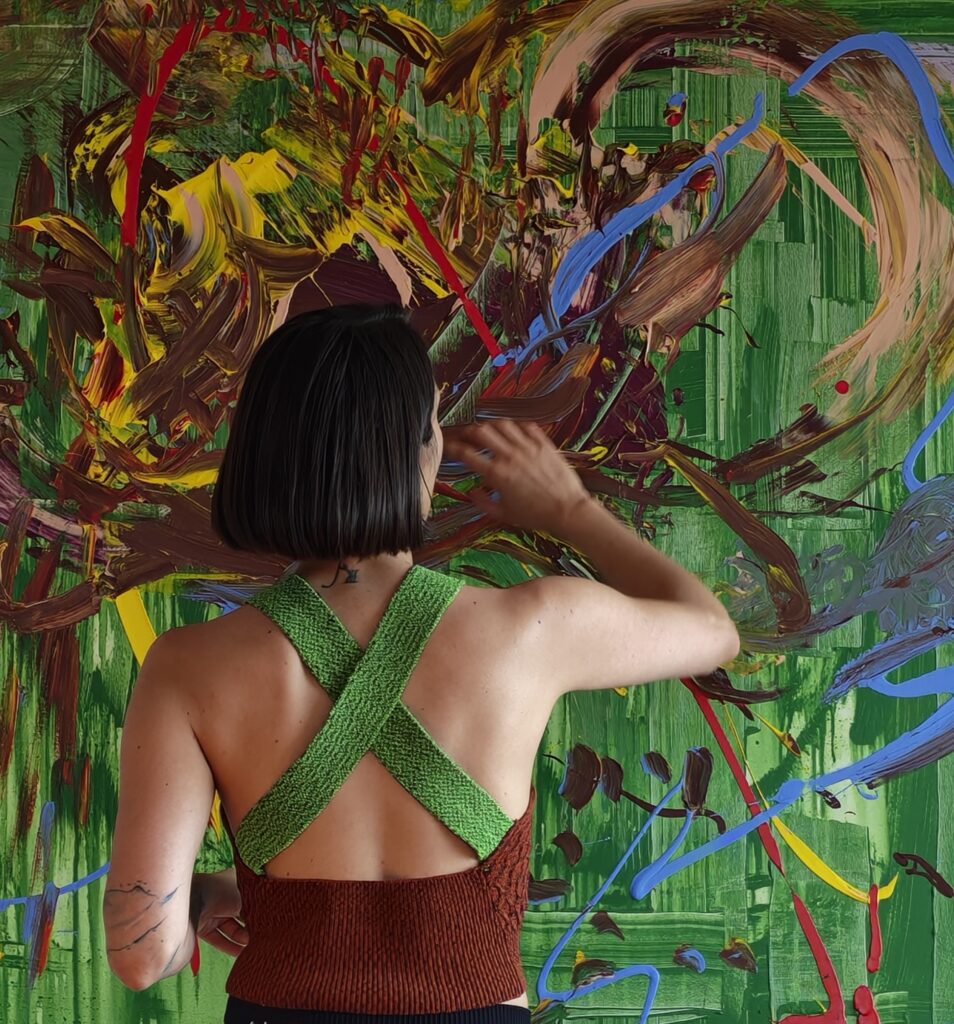
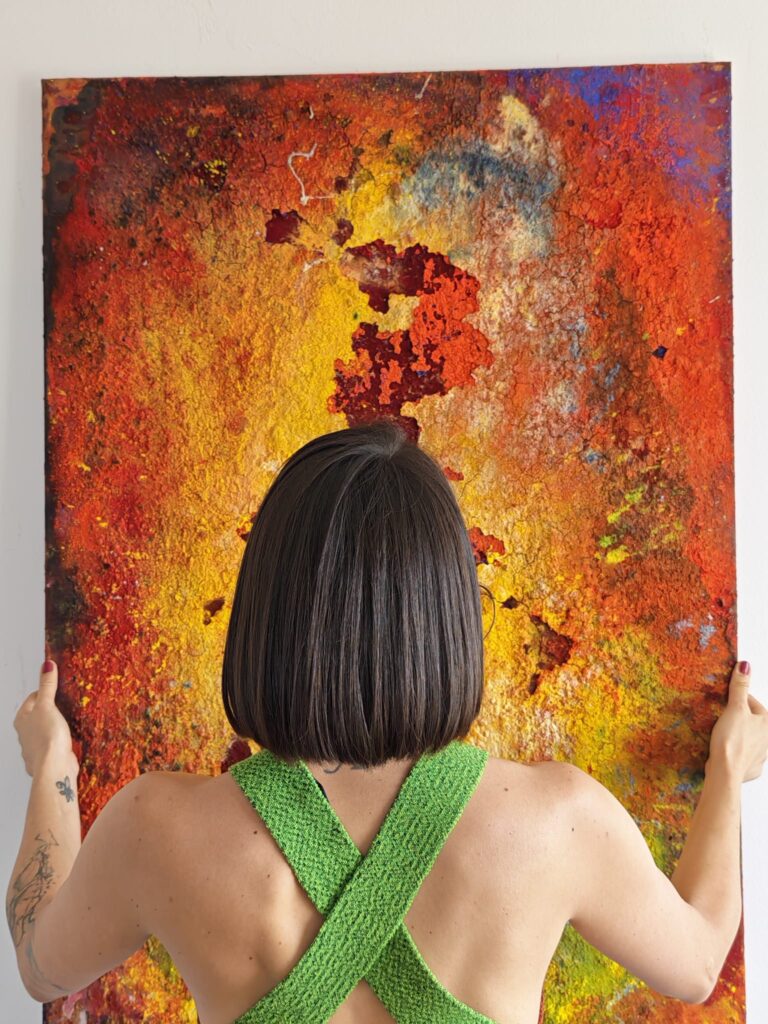
I do not begin a painting with an image already in mind. I begin with the inherent logic of the painting’s format — with the relationship between height and width, the limits of the surface, and the rhythm already contained within its proportions. For me, the format itself is the first form: a space governed by its own internal rules.
Within this framework, I establish a series of polarities: warm and cool, wet and dry, glossy and matte, dense and transparent, stillness and tension, light and darkness. These elements do not exist independently; they gain meaning only through their relationship to one another. I am interested in the precise moment when opposing forces arrive at a state of equilibrium.
Once this balance reaches a sufficient degree of precision, form no longer emerges as an externally imposed decision but as the consequence of the painting’s internal necessity. Form is therefore not predetermined; it is the result of everything that has been established within the work itself.
Through this process, the painting becomes a space in which the visible and the material are constantly transformed. Color is never merely color; it carries temperature, density, direction, and weight. The surface is never simply a surface, but a place where layers accumulate, recede, open, or refract through light.
For this reason, I do not see a painting as a finished composition alone, but as the trace of a process in which relationships gradually come into being. That process involves a continual negotiation between control and the material’s own response. Some passages are the result of deliberate decisions, while others emerge through the behavior of the material itself — its resistance, fluidity, accumulation, or suspension.
My practice unfolds between matter and perception. I am interested in the moment when an internal relationship — tension, movement, or energy — becomes visible through the painting itself. What matters to me is that the work opens a space in which the initial impression gradually deepens. The relationships within the painting guide perception: they lead the eye across the surface, pause it at certain points, return it to others, and reveal multiple layers of spatial depth. In this way, a relationship develops between the painting and the viewer in which attention deepens, perception slows, and what initially appeared as a unified whole gradually reveals the complexity of its internal connections.